 PsyGames
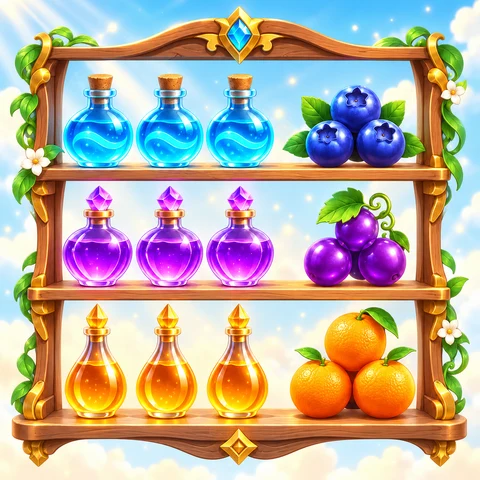
PsyGames · Training hub guide
Sorting puzzles: group, pour, and arrange
The Sorting hub collects activities where you organise objects, combine groups, or move pieces toward a target arrangement. The listed activities use object groups, containers, matching boards, and arrangement challenges. Sorting games here are screen-based tasks with their own rules; they are not a promise that everyday organisation will become easier in every setting.
What is in this hub
Membership follows the app catalogue. Links open descriptions; play happens in the installed PsyGames app. Different modes of one field are not presented as different abilities.
- Goods Sort
- Test Tubes
- Ball Sort
- Nut Sort
- Cake Sort
- Pizza
- Tower of Hanoi
- Tower of London
- Flood
- Same Game
Find the rule that defines a group
Goods Sort, Ball Sort, Nut Sort, Cake Sort, Pizza use familiar objects as material for arranging or grouping. Read the prompt to see which feature matters: colour, type, position, or another visible property. Do not assume that two items belong together just because they look alike. The round’s instruction determines what counts as a correct placement or group.
Sorting games become easier to understand when you name the rule before moving anything. For example, you might compare shape first and colour second only if the prompt permits that. If the exercise asks for one category, keep that category in mind as you scan the available items. A wrong placement can be a useful clue that you were sorting by a feature the task did not ask for.
Move colours between containers
Test Tubes uses containers and coloured contents as a sorting puzzle. The key is to plan where a move will leave space for later transfers. Before pouring or moving a segment, check which tube can accept it and whether another colour will become trapped underneath. The precise legal move depends on the prompt and board state, so use the visible instructions rather than relying on a remembered version of the puzzle.
Sorting games with containers reward a little planning before the first move. Look for an empty space or a tube that can temporarily hold one colour, then decide how you will use it. A move that seems to make immediate progress may block a needed transfer. If you reach a dead end, review the last few placements and identify when the available space disappeared.
Clear matching groups
Flood and Same Game are listed as related activities in the hub. Flood uses colour and connected areas; Same Game asks you to work with groups of matching items. Check the exact rule shown for the selected activity, because removing a group or changing a region can affect what remains available on the board. Think one move ahead when the arrangement will shrink or change.
In these sorting games, the order of moves can matter as much as identifying a match. A small group may open space for a larger one, while removing the wrong set can separate pieces that could have been combined. Before selecting a group, scan the nearby board and consider the result of clearing it. If the prompt sets a target, keep that goal visible while you choose.
Arrange objects in a sequence
Tower of Hanoi and Tower of London are arrangement challenges included in this hub. In Tower of Hanoi, plan how to move a stack while respecting the displayed size and support rules. In Tower of London, study the starting and goal positions, then decide which piece can move without blocking a later placement. For either activity, state the target first and check after each move whether the remaining spaces still allow a path toward it.
A practical planning example is to pause before moving the top piece: identify its destination, note what must move out of the way first, and reserve a temporary position if the instructions allow one. After each move, compare the board with the target and update the next step. This is a way to reason through the visible state, not a claim about an undocumented special mode. If you are unsure which moves are legal, rely on the game’s own prompt.
Plan a route through the listed puzzles
The hub also includes Goods Sort, Test Tubes, Ball Sort, Nut Sort, Cake Sort, Pizza, Flood, and Same Game. Each presents its own board and goal. For a concrete planning habit, read the goal, scan the available spaces, choose one move whose consequence you can explain, then check what changed before continuing. In Test Tubes, for example, consider whether moving a visible segment leaves a useful empty space for a later transfer; use the on-screen rules to decide what is permitted.
Avoid assuming that a familiar puzzle name guarantees a particular layout or move rule. The displayed instructions and board are the authority for that round. When a move closes off options, pause and retrace the recent decisions rather than tapping at random. This step-by-step approach keeps the task tied to the actual puzzle in front of you.
Use a deliberate session
Choose one puzzle and read its rule before beginning. Start with a move you can explain, then inspect how the board changed. If you find yourself tapping without knowing the goal, stop and reread the prompt. Switching between container, matching, and arrangement activities means learning a different rule set, so reread the prompt after each switch.
Sorting games are a way to practise the particular arrangement challenge on screen. They do not establish a general improvement in planning, intelligence, work performance, or daily organisation. If you compare attempts, return to the same puzzle and note whether you recognised the rule sooner or planned a move further ahead. A short, attentive round is enough; there is no required daily dose.
Explore neighbouring hubs
Spatial Thinking includes sliding blocks, routes, pipes, and other layouts. Counting offers arithmetic and number puzzles, while Sudoku focuses on row, column, and region constraints. Sorting games overlap with these hubs in the use of a board, but the goal here is to organise or move items according to the selected activity’s rule.
Sorting games include their own boards and rules. Explore the listed activities at your own pace. Goods Sort and Cake Sort, for example, have their own visible materials, while Test Tubes and the tower puzzles ask you to work with positions and moves. Flood and Same Game also present distinct boards. Let the current instructions define the task instead of assuming all items follow one shared rule.
Frequently asked questions
Which puzzle should I try first?
Choose a format with a clear rule, such as grouping by a visible feature or moving colours between tubes. Read its instructions before your first move.
Are all sorting puzzles about colour?
No. The listed activities include object grouping, containers, matching boards, and arrangement tasks. Follow the rule shown for the puzzle you selected.
Do I need to finish every puzzle in one sitting?
No. Stop when you are no longer tracking the rule, and return later if you want to continue.
Related hubs
Sudoku
Use explicit constraints to decide which value can occupy a cell. Ordinary Sudoku, larger combinations and variants add different restrictions. A teacher-assisted explanation and an independently solved attempt should be distinguished.
Read the hub guide
Space
Rotate a shape mentally, connect a route, untangle lines or plan moves on a field. Mental Rotation, Navigator and path puzzles are grouped by spatial relationships, not by a single shared scoring scale.
Read the hub guide