PsyGames · Practice, explained
Cognitive training exercises in PsyGames
Explore 11 main hubs and two language sub-hubs. Choose what to practice: remembering, noticing, planning, numbers, language or a quiet break. Find real exercises and practical ways to read your progress, without an invented overall brain score.
Every training hub in the app
There are 11 top-level hubs and two language sub-hubs below. These are navigation groups, not extra games or separate users. Some exercises belong to more than one useful grouping; the list describes membership, not a sum of unique games.
Memory Span
Remember a sequence, positions or an earlier item while keeping the order and rule in mind. Digit Span, Positions, N-back and tasks combining processing with recall have different demands; compare their results separately.
Read the hub guide
Mnemonics
Build a deliberate link between information and a place, face, name or word. Memory Palace, Faces & Names and Word Pairs invite a strategy you can explain, rather than repeated guessing at the answer.
Read the hub guide
Chess
Keep a board position in mind, inspect a candidate move or recognize a pattern. This hub combines board-related exercises, not every variant of chess. Remembering a position and solving with the board visible are different tasks.
Read the hub guide
Attention Conflict
Respond to the relevant feature while ignoring a conflicting cue, withhold a response or adapt when the rule changes. Stroop, Flanker, CPT and rule-switching tasks offer distinct patterns of errors to inspect.
Read the hub guide
Visual Search
Find a known target among similar objects, track items or compare two pictures. Schulte, proofreading, visual search and difference-finding share visual scanning, but use different targets, distractors and response rules.
Read the hub guide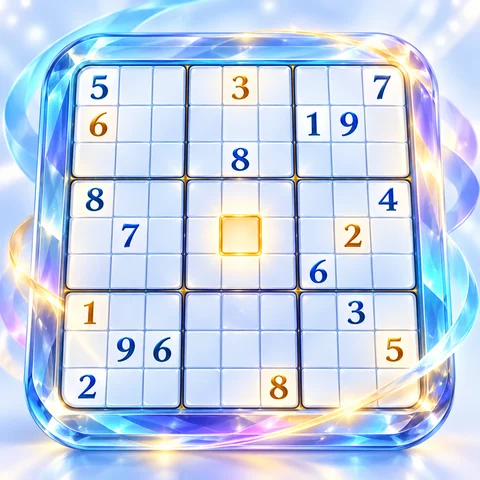
Sudoku
Use explicit constraints to decide which value can occupy a cell. Ordinary Sudoku, larger combinations and variants add different restrictions. A teacher-assisted explanation and an independently solved attempt should be distinguished.
Read the hub guide
Space
Rotate a shape mentally, connect a route, untangle lines or plan moves on a field. Mental Rotation, Navigator and path puzzles are grouped by spatial relationships, not by a single shared scoring scale.
Read the hub guide
Sorting
Rearrange goods, liquid layers, balls or other pieces under a capacity or movement rule. Towers and sorting puzzles reward looking ahead: a locally convenient move can remove the space needed for the next one.
Read the hub guide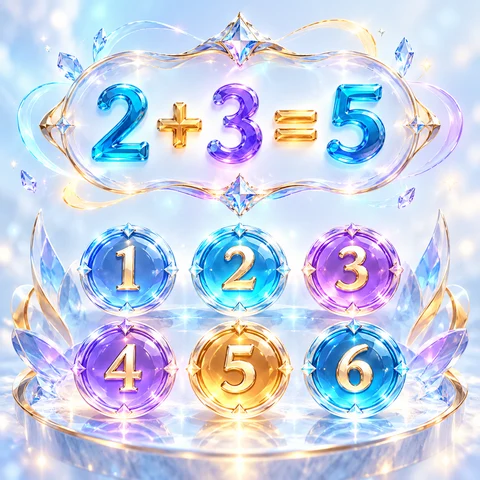
Counting
Work with quantities, arithmetic operations, number bonds and patterns. Mental calculation, quick counting and rule-based number puzzles should be practiced at a level that leaves time to understand a mistake.
Read the hub guide
Languages
A parent hub bringing word-based and sound-based practice together. Its two nested sections are Words and Hearing; they remain separate guides because reading a word, choosing a meaning and distinguishing a sound are not interchangeable.
Read the hub guide
Relaxation
Take a quieter break with breathing, a pause, eye exercises or the night routine. The point is a manageable change of pace, not a performance contest. Completion records a practice, not proof of a physiological change.
Read the hub guideInside Languages
Languages
Words
The language sub-hub for vocabulary, categories, missing words, anagrams and recall. The active task may be recognizing an existing word or producing one yourself; that difference matters when reading the result.
Read the hub guide
Hearing
The language sub-hub for sound contrasts, tones, unfamiliar sound sequences, dictation and rhythm. Playback conditions and available audio affect the task. These exercises do not measure hearing health or diagnose a difficulty.
Read the hub guideFour broader questions about practice
What a useful session can show
Cognitive training exercises provide a bounded task: there is a rule, an input and a response that can be checked. You may notice that you lose the last items in a sequence, tap a forbidden signal too early or choose a sorting move without reserving an empty space. These observations are specific enough to suggest something to try next. A single score does not explain why the mistake happened.
Improvement can mean a more accurate strategy, fewer accidental taps or more familiarity with a particular rule. It does not automatically mean a change in everyday memory, school performance or general intelligence. Keeping this distinction makes feedback more useful: you can describe the task you practiced and the conditions under which the result changed.
Why the hubs are more specific than memory and logic
The broad labels are convenient starting points, but they do not tell you how a round works. Memory Span asks you to retain information; Mnemonics invites an association; Chess may ask you to hold a board position. Those activities can all involve remembering while placing very different demands on the player. Their records should not be added into one interchangeable memory score.
That is why cognitive training exercises are linked here both by broad domain and by actual hub. You can start with a goal such as practicing careful observation, then choose Visual Search for scanning or Attention Conflict for ignoring a misleading cue. The hub pages list the real exercises rather than promising an unrelated function that the app does not contain.
A simple way to begin without chasing every record
Pick one familiar exercise and read its response rule before starting. Use a difficulty at which you can explain an error afterwards. Try a short round, look at what went wrong and repeat only if you still feel comfortable. The purpose of a first session is to understand the interaction, not to establish a permanent personal limit.
For variety, choose a second task with a different demand: for example, a sequence task followed by a planning puzzle. A recovery practice can be a separate pause instead of another timed challenge. There is no need to complete every hub in one day. A small routine you can resume is more practical than a long checklist you stop using.
Read accuracy and time together
Compare the same game, mode and difficulty, and note whether the input method and audio conditions changed. A shorter time with more wrong responses is not the same outcome as a shorter time with the same accuracy. A larger field, a reverse sequence or a different rule can make the next round a different task rather than a worse attempt at the old one.
Useful feedback from cognitive training exercises therefore keeps the underlying measures visible: correct answers, errors, omissions, moves or elapsed time where that game actually records them. Look for a pattern across comparable rounds. A tired evening, an interruption or an unfamiliar instruction can affect a session without defining your ability.
Learning, hints and independent solving
A worked explanation can be valuable precisely because it reveals how to reason about a task. It should not be confused with a fresh independent solution. If a teacher or hint has revealed an answer, use the attempt to understand the reasoning, then try an unfamiliar problem when you want to check what you can do on your own.
This distinction is especially relevant for Sudoku and other constrained puzzles, but it applies to learning a response rule too. Reading an example before a round is different from receiving the answer to the current problem. Treating cognitive training exercises as practice rather than an examination leaves room for both kinds of activity without pretending their results are identical.
What research can and cannot establish here
Research about a task family is not a clinical trial of this app. Sala and Gobet’s 2017 meta-analysis of working-memory training in typically developing children found little evidence for far transfer to other cognitive and academic skills. ACTIVE studied specific training interventions in older adults; its population, activities and follow-up cannot simply be transferred to a phone game.
The reasonable conclusion for this website is limited: we describe the operations a game asks you to practice and let you inspect your game results. We do not advertise treatment, prevention or a guaranteed rise in intelligence. The linked primary papers below make the populations and methods inspectable; they are context, not a certification of PsyGames.
Make practice fit your circumstances
You do not have to use sound for a visual task, race a timer when the task allows a calmer pace or continue a round that is uncomfortable. Listening practice needs audible, consistent playback; visual tasks need a readable field. Changing those conditions is a reason to keep sessions separate when comparing results, not a reason to label one player better than another.
For children, start with understanding the rule and a manageable session rather than a ranking against adults. For an experienced player, novelty can come from a different rule, not only from making every stimulus faster. Stop or switch to a break when the task becomes frustrating or tiring. The app is not a substitute for professional assessment when a concern affects everyday life.
Where to go after choosing a hub
Open a hub guide to see its tasks, then use the trainer catalogue for the descriptions that are available on the site. Play takes place in the installed app; the old embedded web player is not required to read a guide. The download page separates mobile stores from desktop options so you can choose the version appropriate to your device.
Return to cognitive training exercises with a small question you can answer: can I keep the order, reserve one empty space or wait for the relevant cue? Use cognitive training exercises as a way to practice that operation and reflect on the attempt. A clear next step and an honest record are more informative than a grand claim built from unrelated scores.