 PsyGames
PsyGames · Training hub guide
Spatial puzzles: turn, connect, and navigate
The Space hub brings together activities that use positions, paths, shapes, and movement on a board. You may rotate a pattern, connect points, route through obstacles, or slide pieces within a layout. Spatial thinking practice here means working through those specific visual puzzles; it is not a promise of improvement in navigation, work, study, or other untested settings.
What is in this hub
Membership follows the app catalogue. Links open descriptions; play happens in the installed PsyGames app. Different modes of one field are not presented as different abilities.
- Mental Rotation
- Number Twist
- Pipe Network
- Klotski
- Sokoban
- Dots Connect
- One Line
- Trail Making
- Navigator
- Galaxies
- Closed Loop
- Pearl Loop
- Slashes
- Bridges
- Train Tracks
- Untangle
- Pipes
- Sliding Pipes
- Twiddle
- Sixteen
- Fifteen
- Flip
- Rolling Cube
- Black Box
Imagine a shape from another angle
Mental Rotation asks you to compare shapes or objects as they appear in different orientations. Notice the parts that stay in the same relation while you imagine turning the whole figure. If two shapes look similar, compare a distinctive corner or branch rather than relying on the overall outline. A careful mental turn is easier to check than a quick guess based on a single detail.
Spatial thinking practice can begin with a simple question: which parts move together when the shape turns? Number Twist and Twiddle bring rotation into a tile or number arrangement, so you have to consider how each move changes the board. They are not the same as rotating an object mentally; read the activity prompt and respond to the board state the game actually shows.
Plan a route through the board
Pipe Network and Pipes ask you to work with connected segments and a route through the layout. Train Tracks, Bridges, Slashes, Closed Loop, and Pearl Loop also use connections or path constraints. Check where a path begins, where it must go, and whether a line can cross or branch according to the displayed rule. The names point to related themes, but each activity may define its own conditions.
Spatial thinking practice in a path puzzle is often a matter of checking the local move against the final route. A connection that looks neat can still leave an endpoint stranded or make a loop impossible. Work from a constrained point, follow each segment carefully, and revisit the instruction when a crossing or branch is unclear. A slow, consistent route is more useful than drawing lines without checking their consequences.
Move pieces without losing the goal
Klotski and Fifteen use sliding pieces within a bounded board. You move a tile or block into an empty space, planning several changes before the target can reach its destination. Sokoban asks you to move objects through a layout, with the possibility that a push changes which routes remain open. Before acting, look for narrow passages and ask whether a piece can be moved back if the plan does not work.
Spatial thinking practice in block puzzles involves both position and sequence: a legal move now can make a later move impossible. Keep the goal visible and consider which spaces must remain free. If you get stuck, undo or restart only if that option is provided by the game; otherwise trace the last move that closed a route. The point is to understand the board’s constraints, not to make a long series of random moves.
Connect points and trace lines
Dots Connect and One Line give you a network of points or segments to work with. Trail Making asks you to follow a sequence across the display, while Navigator uses a route-oriented format. Look for the required order and the places where lines may meet. When the prompt gives a sequence, keep the next target in mind; when it asks for a single connected route, check that the finished line satisfies the stated start and end conditions.
These tasks can look different even when two tasks both involve a line. One may ask you to follow an ordered path; another may ask you to draw one continuous connection without repeating an edge. Read the short instruction each time and resist carrying a rule over from another puzzle. If you lose track, return to the last point you can verify and work forward from there.
Solve patterns with extra constraints
Galaxies divides a board into regions around marked centres, while Untangle asks you to rearrange points or lines so that unwanted crossings are resolved. Black Box uses hidden information and responses to help you infer where objects are; Rolling Cube changes the orientation and position of a cube as it moves. These named activities make the hub broader than a single geometry exercise, so learn the goal before applying a familiar trick.
Spatial thinking practice can include inference as well as direct rotation. In a hidden or constrained puzzle, keep track of what each clue rules out and which possibilities remain. In a cube or tile task, inspect the current orientation before your next move. The most useful note after a round is a concrete one: which clue changed your plan, or which orientation did you overlook?
Choose a manageable challenge
Start with an activity whose board and goal you can explain in your own words. Number Twist, Pipe Network, Klotski, Sokoban, and the route puzzles make different demands; switching between them is fine, but give yourself a moment to reset. If a board becomes confusing, identify the move or constraint you do understand, then build from there rather than pressing quickly to see what happens.
Spatial thinking practice is not a contest to finish every board in one sitting. Take a short break if you are no longer tracking the position. You can return later, select a different format, or stop. No activity requires a particular daily dose, and difficulty on one puzzle does not describe your general intelligence or ability to navigate real places.
Compare sessions without overclaiming
If you revisit the same format, note whether you remembered the rule, planned farther ahead, or avoided a move that blocked the route. Keep the board type and instructions similar when comparing attempts. A familiar puzzle can become easier because you know its layout or have seen a similar pattern before; that is useful learning about the task, but it is not proof of a broad transfer to unrelated activities.
Spatial thinking practice sits beside Sudoku, Sorting, and Chess. Those hubs also contain boards and visual decisions, yet their rules and objectives differ. Choose the one whose kind of problem you want to explore, and describe what you actually did: rotate, connect, slide, trace, or navigate. The exercise result is a practice outcome, not a clinical or intelligence assessment.
Frequently asked questions
Which puzzle should I try first?
Pick a task whose instructions are clear, such as Mental Rotation, Number Twist, or a simple path puzzle. Try another format when you want a different kind of board.
Are all the activities about rotating shapes?
No. The hub also includes path, connection, block-moving, tile, and navigation puzzles. Each activity has its own goal.
Will these puzzles improve my real-world navigation?
The guide cannot promise that. It describes practice with the named screen-based puzzles, not a measured outcome in other settings.
Related hubs
Sudoku
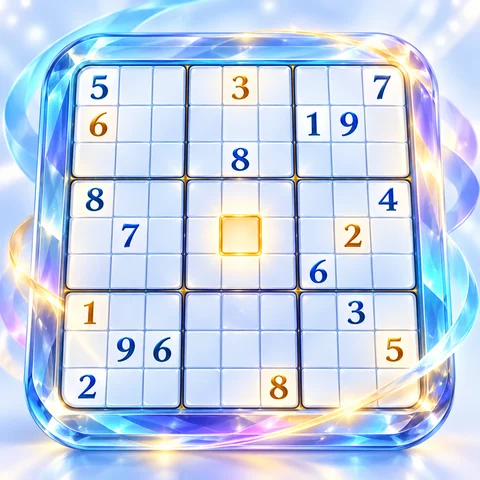
Use explicit constraints to decide which value can occupy a cell. Ordinary Sudoku, larger combinations and variants add different restrictions. A teacher-assisted explanation and an independently solved attempt should be distinguished.
Read the hub guide
Sorting
Rearrange goods, liquid layers, balls or other pieces under a capacity or movement rule. Towers and sorting puzzles reward looking ahead: a locally convenient move can remove the space needed for the next one.
Read the hub guide