 PsyGames
PsyGames · Training hub guide
Sudoku and number-placement puzzles
The Sudoku hub begins with familiar number placement and then branches into grids with extra constraints and related puzzles. Each activity asks you to use its own rules to narrow the options, rather than relying on a guess. Sudoku for logical thinking describes a puzzle format to practise; it is not a promise of broad cognitive change or a measure of intelligence.
What is in this hub
Membership follows the app catalogue. Links open descriptions; play happens in the installed PsyGames app. Different modes of one field are not presented as different abilities.
- Sudoku
- Samurai
- Fractal Sudoku
- Towers
- Futoshiki
- Killer
- Free
- Sudoku for Little Ones
- Cats
- Odd or Even
- Extra Numbers
- Undead
- Arithmetic Cages
- Tatham’s Sudoku
- Tatham’s Towers
- Tatham’s Unequal
- Filling Regions
Use the constraints, not a hunch
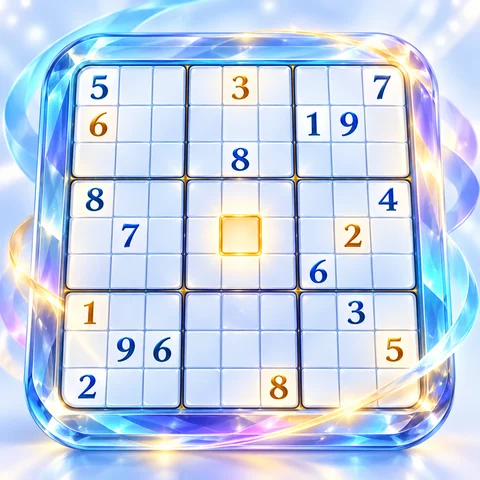
In classic Sudoku, fill the grid so that each required symbol appears once in each row, column, and outlined region. The numbers act as labels; ordinary Sudoku does not ask you to calculate with them. A useful first move is to inspect the row, column, or region with the fewest possible choices, then eliminate candidates using the other two constraints.
Sudoku for logical thinking is most satisfying when each placement has a reason you can state. If you cannot explain why a digit belongs in a cell, pause before entering it. A guess may sometimes happen in casual play, but a forced placement helps you understand the puzzle’s structure and makes it easier to spot where a later contradiction began.
Move from one grid to several
Sudoku includes classic grids as well as Samurai and Fractal Sudoku. Samurai uses overlapping grids; a shared area belongs to more than one board, so a placement can affect several regions. Fractal Sudoku uses an expanded pattern of connected regions. Read the board carefully before solving: the extra layout changes which rows, columns, or regions a choice constrains.
Sudoku for logical thinking in an overlapping layout is different from solving one isolated grid. A digit that fits one region may be ruled out by a neighbouring grid sharing the same cells. Work from the most constrained area and revisit the overlaps after each placement. If the larger pattern feels confusing, start with a standard board and return when you can keep track of one set of constraints at a time.
Explore inequality and cage rules
Towers, Futoshiki, Killer, and Arithmetic Cages add rules beyond classic Sudoku. Futoshiki uses inequalities between cells; Killer-style cages add a target sum for the cells inside a marked group. The Towers name points to a visibility-style puzzle, while Arithmetic Cages makes the arithmetic condition explicit. Read the symbols and any stated rule before placing a value.
Sudoku for logical thinking can include arithmetic clues without turning every task into arithmetic practice. In a cage puzzle, use the sum together with the row, column, and region restrictions. In Futoshiki, check whether a value respects the inequality signs. A valid placement must satisfy all applicable constraints at once; one locally plausible answer may still make the rest of the board impossible.
Try lighter and related formats
Free and Sudoku for Little Ones offer different entry points within the hub. Cats and the named puzzle modes Odd or Even, Extra Numbers, Undead, and Filling Regions broaden the selection beyond a standard Sudoku grid. Their exact goal may differ, so let the activity’s instructions lead. Do not assume that a mode uses classic row-and-box rules just because it appears beside Sudoku.
A sudoku for logical thinking session can move from a familiar board to a different puzzle only after you know what the new task asks. Extra constraints may change the deduction; a themed name may indicate a distinct objective. When trying an unfamiliar mode, solve one example slowly and note which information the display gives you. If that is still unclear, choose another activity and return later.
Tatham’s puzzle collection
Tatham’s Sudoku, Tatham’s Towers, and Tatham’s Unequal are listed as separate activities. Their shared attribution does not make their rules identical: a Sudoku grid, a tower-visibility puzzle, and an inequality puzzle call for different ways of checking a candidate. Use the heading and instruction of the selected game, and keep the rules visible in your mind while working.
This is one specific branch of a wider puzzle set. If you move from Sudoku to Towers, look for visibility clues; if you move to Unequal, compare values with the inequality signs. Treat each switch as a fresh task, not a harder level of the same exercise. This helps you avoid carrying a familiar but incorrect rule into a new board.
Make deductions easy to review
When a puzzle stalls, scan the board for a row, column, region, cage, or inequality that limits the fewest options. Write down candidates if the interface supports it; otherwise keep the candidate set small in your reasoning. After a placement, check how it affects connected constraints. If a contradiction appears, revisit the latest uncertain move rather than restarting without learning what caused the conflict.
Sudoku for logical thinking works as a description of this kind of deliberate puzzle practice, not as a claim that solving a grid will make every decision easier. Compare similar boards if you want to notice whether you are learning the format, and remember that familiarity can improve a result on that puzzle itself. No clinical, intelligence, or guaranteed real-world outcome follows from a completed round.
Choose a pace that suits the board
A short session can be one standard grid or a few minutes with a new variant. Take a break when you start placing values without checking the constraints. You can choose a simpler grid, return to a mode whose rule is familiar, or stop and resume later. There is no required number of puzzles to complete and no reason to treat a difficult board as a personal failure.
The neighbouring Spatial Thinking, Sorting, and Counting hubs offer other puzzle families. Sudoku for logical thinking stays focused on number placement and related constraint puzzles, while those hubs use different board layouts and actions. Choosing among them is a way to vary the kind of task, not a ranking of which mental ability is stronger.
Frequently asked questions
Do I need to calculate in classic Sudoku?
No. In ordinary Sudoku the digits are symbols. You use row, column, and region constraints to decide where each one can go.
Which variant should I try first?
Start with a standard grid. Then choose a clearly named variant such as Futoshiki or Killer and read its extra rule before beginning.
Does solving Sudoku prove I have strong logic?
No. It shows how you handled a particular puzzle. It is not an intelligence or clinical assessment.
Related hubs

Space
Rotate a shape mentally, connect a route, untangle lines or plan moves on a field. Mental Rotation, Navigator and path puzzles are grouped by spatial relationships, not by a single shared scoring scale.
Read the hub guide
Sorting
Rearrange goods, liquid layers, balls or other pieces under a capacity or movement rule. Towers and sorting puzzles reward looking ahead: a locally convenient move can remove the space needed for the next one.
Read the hub guide